
All anxiety isn’t necessarily neurodivergent. While many psychologists do believe that neurodivergent anxiety exists, it’s more widely accepted that anxiety doesn’t fall into the neurodiversity category. Because everyone struggles with anxiety at some point in their lives, to put any anxiety under the umbrella of neurodiversity seems unwise.
At Neuralia TMS, we believe that anxiety comes in different degrees, and can be strategically dealt with using transcranial magnetic stimulation. The benefits of this treatment have been received well by many of our patients, and TMS continues to help hundreds of people with anxiety disorders, as well as mild anxiety.
Around 28% of Australians have experienced an anxiety disorder at some point in their lives, according to ABS. In many instances, anxiety can be debilitating and disruptive to normal life. That’s why we’ve compiled this guide to help you understand anxiety, and why it’s not considered neurodivergent.
Key Takeaways
- Not all people who experience anxiety are classified as neurodivergent individuals.
- Neurodivergent individuals have a heightened sensory mental experience, and experience anxiety differently from others.
- Mental health conditions that are considered neurodevelopmental disorders (aka neurodivergent) include autism spectrum disorder (ASD), dyslexia, ADHD, and Tourette’s disorder.
- TMS is an excellent method for treating many types of anxiety and anxiety disorders.
Are Some Anxiety Disorders Considered Neurodivergent?
While many neurodivergent individuals may experience anxiety, anxiety itself isn’t considered neurodivergent. Because there are so many degrees and types of anxiety and anxiety disorders, grouping them all into a neurodivergent category isn’t practical. It’s best to ask whether people who are neurodivergent experience anxiety differently from others.
What is Neurodivergence?
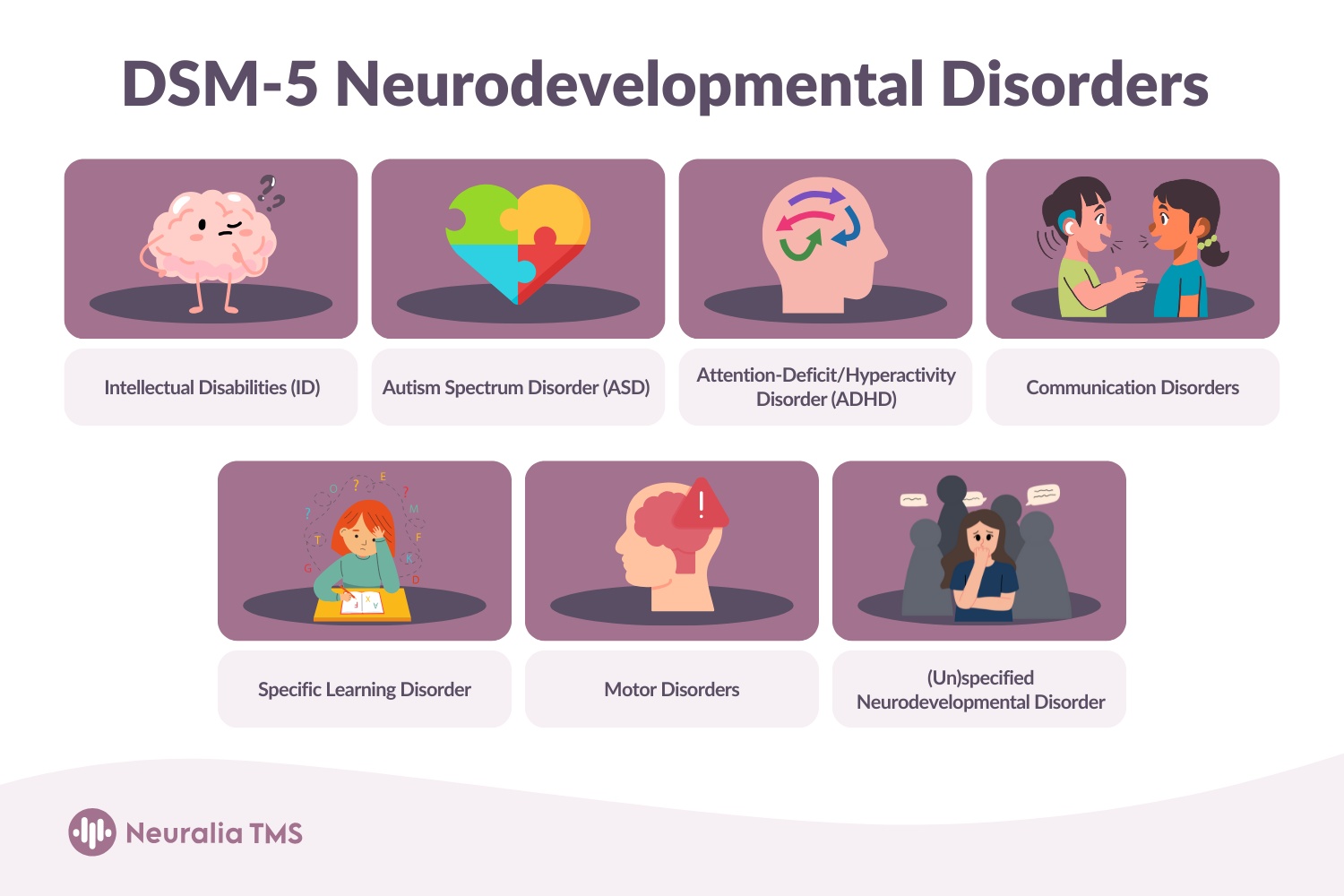
Neurodivergence refers to a working of the brain that’s different from typical individuals. In general, neurodivergence leads to mental health conditions that are considered neurodivergent, such as:
- Autism Spectrum Disorder (ASD)
- Attention Deficit Hyperactivity Disorder (ADHD)
- Dyslexia
- Dyspraxia (Developmental Coordination Disorder)
- Dyscalculia
- Tourette Syndrome
However, these disorders are not strictly related to every neurodivergent person.
In the DSM-5, neurodevelopmental disorders (NDDs) include intellectual disability (ID), autism spectrum disorder (ASD), and attention-deficit/hyperactivity disorder (ADHD). These are almost always related to someone considered as neurodivergent.
What is an Anxiety Disorder?
An anxiety disorder can be classified as a deep fear (often irrational) that intrudes on a person’s psyche and disrupts their mental well-being. This can include:
- Generalised Anxiety Disorder
- Phobias
- Panic disorder
- Agoraphobia (fear of being in situations where escaping is difficult or embarrassing)
- Social anxiety disorder
- Separation anxiety
- Selective mutism
- Post-traumatic stress disorder (PTSD)
Do Neurodivergent Individuals Experience Anxiety Differently?
Yes, neurodivergent people almost always experience anxiety at a more enhanced level. That’s because these individuals have a variety of triggers that may differ from other people. They also have a higher chance of experiencing an elevated sensory overload, which may increase their anxiety.
Reasons neurodivergent people may experience anxiety differently to other individuals is because of the following:
| Factor | Effect on Anxiety | Example |
|---|---|---|
| Heightened Sensory Sensitivity | Increased overwhelm from environment | Loud noises causing distress |
| Different Triggers | Anxiety from unexpected changes | Sudden change in routine causing stress |
| Stronger or More Intense Reactions | Difficulty regulating emotions | Panic in social situations |
| Masking & Burnout | Exhaustion from hiding symptoms | Acting neurotypical, leading to fatigue |
| Cognitive Differences | Struggles with organisation | Forgetting deadlines causing worry |
| Co-Occurring Conditions | Multiple challenges at once | ADHD and anxiety affecting focus |
What are Some Available Treatments for Anxiety?

Treatments for anxiety include transcranial magnetic stimulation, cognitive behavioural therapy, and anxiety medication. Other methods may also include regular therapy, mindfulness techniques, and meditation. Some therapists will also recommend dietary and lifestyle changes, or suggest the patient joins a support group.
| Treatment | How It Helps | Example |
| Transcranial Magnetic Stimulation (TMS) | Uses magnetic fields to stimulate brain activity | Non-invasive sessions for treatment-resistant anxiety |
| Cognitive Behavioural Therapy (CBT) | Helps change negative thought patterns | Learning to reframe anxious thoughts |
| Medication | Balances brain chemicals linked to anxiety | Selective serotonin reuptake inhibitors (SSRIs) |
| Mindfulness & Relaxation Techniques | Reduces stress and promotes calmness | Meditation and deep breathing exercises |
| Lifestyle Changes | Supports overall mental health | Regular exercise and a balanced diet |
| Support Groups & Therapy | Provides emotional support and coping strategies | Talking to others with similar experiences |
Arguments for Categorising Anxiety as Neurodivergent
Many may make an argument for categorising anxiety as neurodivergent because of the neurological differences in neurodivergent persons. Because many neurodivergent people process thoughts and external information in a chronic, atypical manner, this has also added to the argument. However, more often than not, anxiety (in its various forms) simply overlaps neurodivergent conditions.
Challenges in Categorising Anxiety as Neurodivergent
As mentioned, anxiety is common among people who are already classified as neurodivergent. So, while many neurodivergent people struggle with anxiety in one form or another, not all people with anxiety are necessarily neurodivergent. Because anxiety is situational, it cannot (and should not) be defined as neurodivergent.
How Can TMS Help with Anxiety?
TMS can help with anxiety by modulating brain activity and reducing overactivity in the fear areas of the brain. Using magnetic pulses, TMS stimulates neurons in targeted areas of the brain, influencing their activity and neural circuits, which may help improve symptoms of conditions like anxiety and depression. The treatment is non-invasive and has had long-lasting benefits for almost all of our patients at Neuralia TMS.
Contact us if you have any questions about this treatment. We’ll tell you what you can expect at your first session and help you decide how many sessions you should have to treat your anxiety.
FAQs on Is Anxiety Neurodivergent?
Can anxiety lead to neurodivergent-like behaviours?
Yes, anxiety might lead to behaviours that could be perceived as neurodivergent. However, this does not necessarily mean that the person experiencing anxiety is neurodivergent. For this reason, anxiety in itself is not considered by most experts to be neurodivergent.
How is anxiety treated in neurodivergent individuals?
Because neurodivergent individuals’ brains work differently and are more sensitive, treatment is often customised. There may be a combination of therapy, group therapy, cognitive behavioural therapy, TMS, dietary changes, and medication. The right combination is typically ascertained by the neurodivergent person’s therapist.
What are common fallacies about anxiety and neurodivergence?
Common fallacies about anxiety and neurodivergence include:
- Anxiety is just a symptom of neurodivergence
- Neurodivergent individuals can ignore their anxiety
- Anxiety looks the same for everyone
- Anxiety in neurodivergent individuals is due to behavioural issues
- All neurodivergent individuals have anxiety
Back to Top: Is Anxiety Neurodivergent?


