

Complex PTSD (C-PTSD) vs. PTSD: Recognising and Treating Complex Trauma
https://www.neuraliatms.com.au/wp-content/uploads/Where-TMS-Fits-as-a-Treatment-Option-Complex-PTSD-Treatment.png
1500
1000
Neuralia TMS
//www.neuraliatms.com.au/wp-content/uploads/2023/02/neuralia-tms-colour-wide.svg
TMS for Migraines
Migraines are more than just a bad headache. They are a complex neurological disorder characterised by recurring episodes of moderate to severe throbbing or pulsing head pain, often on one side of the head. They are also frequently accompanied by nausea, vomiting, and extreme sensitivity to light and sound.

During a migraine attack, changes occur in the brain, including the activation of certain nerves and blood vessels, leading to the release of inflammatory chemicals and hormones. This triggers a cascade of events, causing intense pain and associated symptoms experienced by migraine sufferers.
TMS for Migraines: The Evidence

Multiple recent scientific studies show that transcranial magnetic stimulation (TMS) could be a worthwhile treatment for migraines. One study, including 40 patients, showed a noticeable reduction in pain levels, how often migraines happened, how long they lasted, and how much medication was needed to ease the effects.
Another study backed up the positive effects on frequency and severity, saving migraine sufferers about 8 days of pain every month! Yet another study agrees that TMS is effective for migraines, but further research is recommended.
As TMS is a relatively new treatment option for this kind of disorder, more research is needed. However, research done so far shows promising results for migraine sufferers who haven’t found relief in other ways.
How Does TMS Work for Migraines?
TMS uses magnetic pulses to stimulate specific areas of the brain. It’s gaining attention as a potential solution for migraines, especially for those who have not found relief with traditional medications.
It’s been successful for migraines with aura, migraines without aura, and even shows promise to prevent migraines from happening as often. Here’s how transcranial magnetic stimulation in migraine treatment works.
Magnetic Pulses Stimulate the Brain
TMS works by delivering brief magnetic pulses through a coil that’s placed on the scalp. These pulses generate electrical currents, which stimulate nerve cells in specifically targeted areas of the brain. If you suffer from migraines, this stimulation can alter brain activity, helping to reduce the severity and frequency of migraine attacks.
Targets Areas Involved in Migraine Pain
The magnetic pulses specifically target brain regions involved in pain processing and something called “cortical spreading depression”, a phenomenon linked to migraine attacks. By modulating the activity in these areas of the brain, TMS can help alleviate migraine symptoms during an attack and even lower your chances of having another attack soon after.
What type of TMS is used to Treat Migraines?

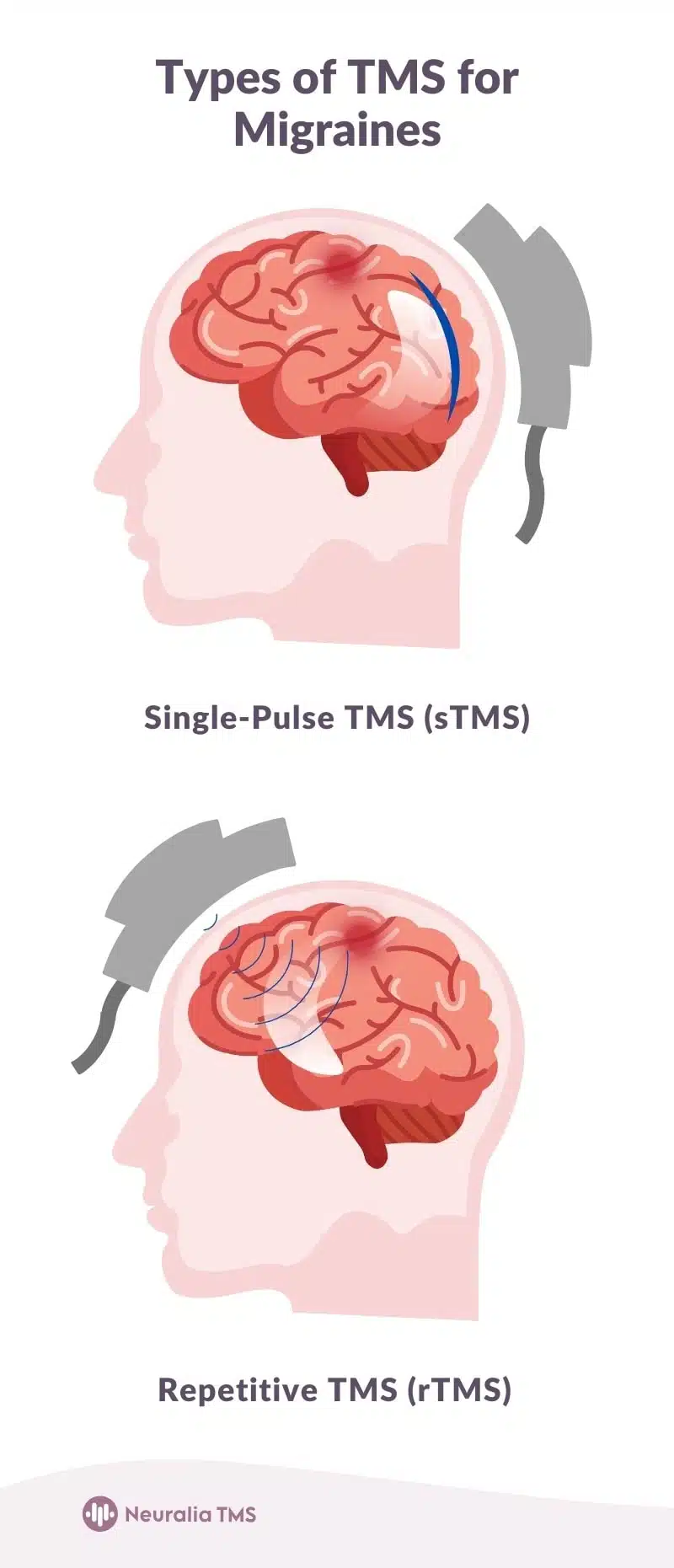
There are two main types of TMS used for treating migraines:
- Single-Pulse TMS (sTMS): Single-pulse transcranial magnetic stimulation involves delivering a single magnetic pulse to the back of the head (occipital cortex) at the onset of a migraine aura or headache.
- Repetitive TMS (rTMS): Repetitive transcranial magnetic stimulation involves delivering repeated magnetic pulses to specific areas of the brain, typically the dorsolateral prefrontal cortex.
In some cases, other areas of the brain may also be targeted, such as the visual cortex or motor cortex, depending on the person’s specific migraine patterns. Notably, both sTMS and rTMS have shown effectiveness in treating migraines, but rTMS is commonly accepted as the better choice for migraine prevention treatment.
Who is Eligible for TMS Migraine Treatment?

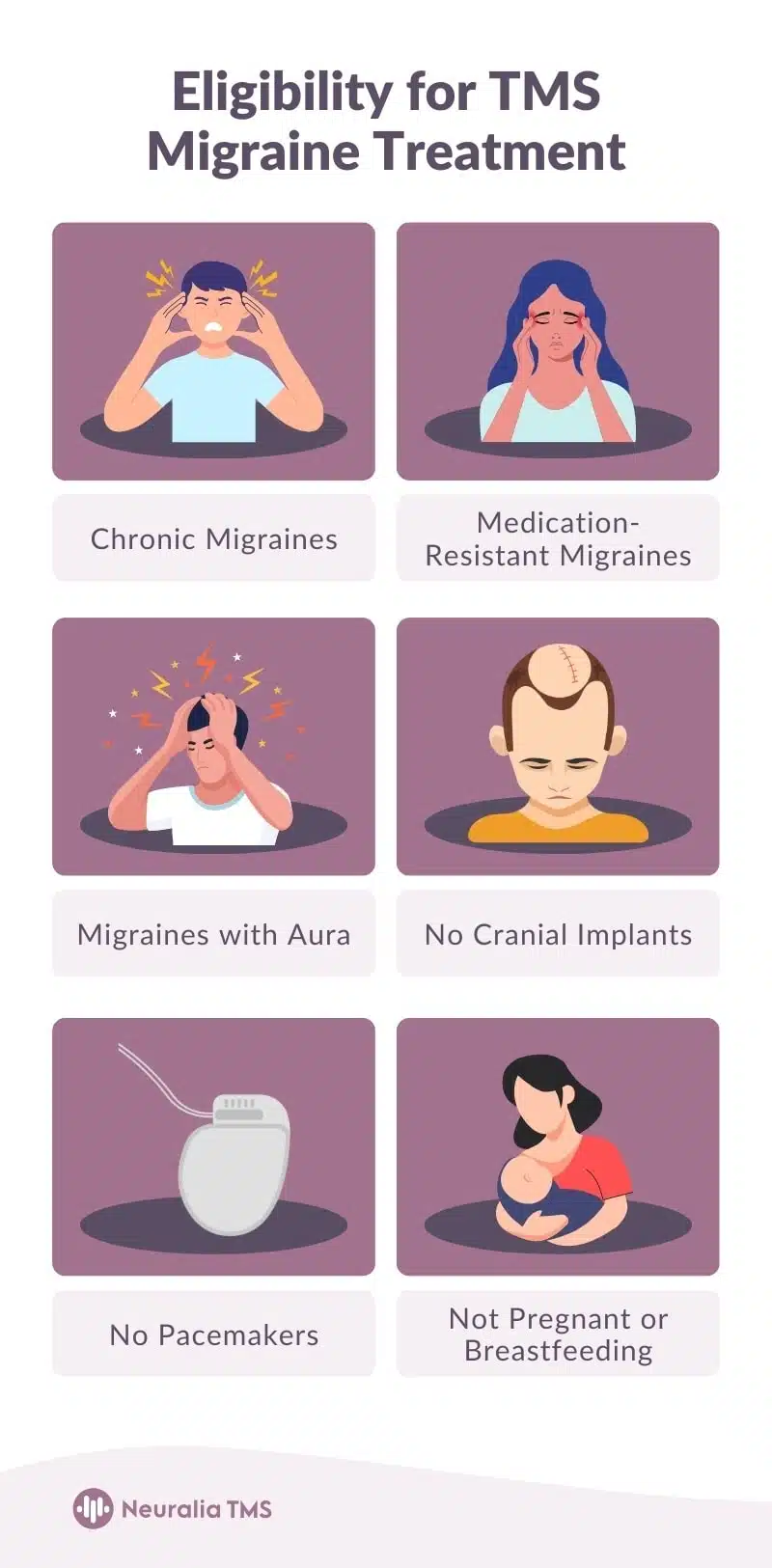
Adults with Chronic Migraines
TMS is particularly suitable for adults who experience chronic migraines. If you’re having migraines for 15 or more days per month, it counts as chronic, and you’ll be an excellent candidate for TMS therapy.
Individuals with Medication-Resistant Migraines
If you haven’t responded well to traditional migraine medications, TMS could be an effective alternative treatment. Since TMS doesn’t involve medication, it avoids the side effects associated with many migraine drugs.
Patients Without Metal Implants in the Head
Candidates for TMS should not have any metal implants in or around the head, as the magnetic pulses can interfere with these devices. If you have cranial plates or implants, you’ll need to look at other options.
Migraines with Aura
If you experience a visual, sensory, or speech disturbance before the onset of the headache, you may be eligible for sTMS (single-pulse TMS). You may be a suitable candidate for a TMS machine for migraine treatment at home, but this should be verified by a doctor first.
Who Should Not Use TMS?
TMS is almost always safe, but it’s not suitable for everyone. If you have a history of seizures, you are not a good candidate for TMS. You’ll also need to take extra care and even avoid TMS with certain psychiatric conditions, as it may aggravate your condition. Moreover, if you have any implanted medical devices (like pacemakers), you should avoid TMS, as it can interfere with your implants.
In general, pregnant and breastfeeding women should avoid TMS. While there’s no indication that the magnetic field can cause damage to a foetus, not enough research has been done to be sure.
It’s important to undergo a thorough evaluation by a healthcare provider to make sure you’re a good candidate before looking into TMS therapy for migraines.
Benefits of Choosing TMS for Migraines
Non-Invasive (No Surgery Required)
TMS is a non-invasive brain stimulation procedure, meaning it doesn’t involve surgery or anaesthesia. Patients can have treatment sessions without pain, worry, or disruption to their daily lives. If you have anxiety about medical procedures, TMS also sets your mind at ease, as it’s not an invasive treatment.
Minimal Side Effects Compared to Medications
Unlike many migraine medications, TMS has very few side effects (if any). Common side effects include scalp discomfort, mild light-headedness, or a slight headache during or after the session, but these are still rare and have all been reported as very mild.
Can Complement Other Treatments
TMS can be used with other migraine treatments, including pain treatment, providing a complementary approach to managing the condition. Those who wish to ease up on medication doses or who want to try something natural along with other approaches can easily add TMS to their treatment without it interfering with other treatments.
Are there any Negative Effects of TMS Treatment for Migraines?
TMS for migraine headaches is generally considered a safe and non-invasive treatment. Common side effects of TMS are mild and temporary, and may include scalp discomfort and mild headaches during or after the session.
Rarely, patients might experience lightheadedness or tingling sensations. Serious side effects are uncommon and are more likely to happen to those with underlying conditions. For example, seizures can happen in people who have a history of seizures or neurological conditions. It can also trigger an episode in those with bipolar disorder.
Patients who undergo long-term rTMS sessions have a chance of developing hearing problems if their ears aren’t properly protected. This is due to the loud clicking noise that happens during treatment, but is preventable with some care.
The Full TMS Treatment Process

Initial Evaluation
Before being able to undergo TMS treatment of migraine headaches, you’ll need a thorough assessment by a medical professional. After reviewing your medical history and doing a physical examination, they’ll be able to give you the go-ahead if you’re a good candidate for TMS treatment.
4 to 6 Weeks of TMS Sessions
The standard TMS treatment regimen spans 4 to 6 weeks, with daily sessions lasting 20 to 40 minutes each. However, your TMS provider will tailor your treatment plan to suit your needs. There’s no one-size-fits-all option, even though the TMS procedure is generally the same for everyone.
Post-Course Sessions (If Necessary)
After the initial treatment phase, you may need follow-up sessions if you haven’t yet reached your goals. Treatments can be scheduled on an “as needed” basis, but it depends on the patient.
What to Expect in a TMS Session
During a TMS session, you will sit comfortably while a TMS technician places the magnetic coil on your scalp. The device emits clicking sounds and gentle tapping sensations as it delivers magnetic pulses. Sessions are generally well-tolerated, so you can relax, read, or listen to music during the treatment.
TMS for Migraines FAQs
Does Insurance Cover TMS for Migraines?
Medicare doesn’t currently cover TMS specifically for migraine treatment. However, Medicare does offer rebates for TMS used to treat depression. Neuralia TMS’s treatment for depression is fully covered by Medicare, with zero out-of-pocket costs.
Insurance coverage can vary, although most private companies only apply it to treatment for mental health conditions that are resistant to medication. Check with your insurance provider before deciding to proceed with TMS treatment for migraines, so you know what your costs are likely to be.
How Much Does TMS Cost?
TMS treatment costs on average between $150 and $350 per session. If you’re getting a Medicare rebate, you may end up paying between $40 and $100 for every session. This does vary between providers, so ask for a cost estimate upfront.
What Is the Success Rate of TMS for Migraines?
With sTMS, 40–50% of trial patients experienced pain relief for acute migraines with aura. Similarly, 40–50% of trial patients for rTMS had fewer migraine days – reduced by 50% or more. The success rate of TMS for migraines varies depending on several factors, including the type of TMS chosen, the type of migraine, and individual responses to treatment.
Based on clinical trials and research studies, here’s a general overview of TMS success rates.
- Single-Pulse TMS (sTMS): Around 40–50% of people experience pain relief within 2 hours of using sTMS for acute migraines with aura.
- Repetitive TMS (rTMS):
- Approximately 40–50% of patients experience a 50% or greater reduction in migraine days per month.
- About 30% of patients achieve complete freedom from migraines.
- Many patients report improvements in pain intensity, quality of life, and medication use.
It’s important to note that these are average figures. Individual results can vary. Some people may experience significant improvement, while others may not respond as well to treatment.
Contact
Contact Neuralia TMS today and take a step toward a quieter, more fulfilling future.
Phone: 08 6230 3996 / 08 6230 2231
Email: info@neuralia.com.au / referrals@neuralia.com.au
Healthlink ID: neuralia
Dr Shanek Wick – Author Bio
Dr. Shanek Wick, a distinguished Fellow of the Royal Australian and New Zealand College of Psychiatrists, specialises in holistic mental health care with a focus on interventional psychiatry, neurostimulation, and addiction.
Why Neuralia TMS

Lead by Psychiatrists

Next Day Consults Available

Evidence-based, individualised treatment programs

Medicare rebates available
TMS Machine Resources

PTSD Treatment in Perth: Your Options Explained
https://www.neuraliatms.com.au/wp-content/uploads/Psychological-Therapy-for-PTSD-Treatment-Perth.png
1500
1000
Neuralia TMS
//www.neuraliatms.com.au/wp-content/uploads/2023/02/neuralia-tms-colour-wide.svg
PTSD Treatment in Perth: Your Options Explained

MDMA-Assisted Therapy for PTSD: What the Evidence Shows
https://www.neuraliatms.com.au/wp-content/uploads/MDMA-Assisted-Therapy-for-PTSD-What-the-Evidence-Shows.png
1500
1000
Neuralia TMS
//www.neuraliatms.com.au/wp-content/uploads/2023/02/neuralia-tms-colour-wide.svg
MDMA-Assisted Therapy for PTSD: What the Evidence Shows

TMS vs. Antidepressants: Which Treatment Is Right for You?
https://www.neuraliatms.com.au/wp-content/uploads/TMS-vs-Antidepressants-Which-Treatment-Is-Right-for-You.png
1500
1000
Neuralia TMS
//www.neuraliatms.com.au/wp-content/uploads/2023/02/neuralia-tms-colour-wide.svg
Reviews
Punya Singh
“TMS for Tinnitus”
I had a remarkable experience at Neuralia TMS under the care of Dr. Wick and their dedicated team of staff. The staff here truly go above and beyond to make you feel comfortable and at ease throughout your journey.
vinura g
“TMS for Tinnitus”
I recently had the opportunity to visit Neuralia TMS, and I must say that my experience was nothing short of exceptional. From the moment I walked through the doors, I could sense a warm and welcoming atmosphere, which immediately put me at ease
Sonya S
“TMS for Tinnitus”
I must say Dr Shanek is one of the kindest, most humble psychiatrist I have ever met. I am so grateful to have received TMS treatment and I am impressed by the changes I have had in my mood status. Highly recommend Dr Shanek to anyone looking for an excellent Psychiatrist.
James Mons
“TMS for Tinnitus”
Dr. Shanek Wick has been absolutely fantastic to work with and came highly recommended to me via my GP. I’ve been referring people to Neuralia TMS ever since. I definitely had some hesitations prior to commencing this journey, but I felt very reassured, and most importantly, I felt heard.