

Complex PTSD (C-PTSD) vs. PTSD: Recognising and Treating Complex Trauma
https://www.neuraliatms.com.au/wp-content/uploads/Where-TMS-Fits-as-a-Treatment-Option-Complex-PTSD-Treatment.png
1500
1000
Neuralia TMS
//www.neuraliatms.com.au/wp-content/uploads/2023/02/neuralia-tms-colour-wide.svg
TMS Treatment for PTSD
PTSD is a complex disorder that is thought to involve several neurological mechanisms.
It is believed that individuals with PTSD may have disrupted activity in the amygdala, a region of the brain involved in the processing of emotion and fear.

This disruption may cause individuals to be more easily triggered into a fear response when exposed to reminders of a traumatic event, leading to PTSD symptoms such as flashbacks and anxiety. Additionally, individuals with PTSD may have changes in the way their hippocampus, a brain region involved in memory formation, processes information related to the traumatic event.
What Causes PTSD?
Post-traumatic stress disorder (PTSD) manifests when feelings of fear, anxiety, and lingering memories of a distressing event fail to subside. These persistent emotions and sensations significantly impede an individual’s capacity to manage daily life activities.
In Australia, PTSD is a prevalent condition, impacting more than half a million people annually. First responders such as police, fire, and ambulance officers, as well as veterans from the armed forces, are particularly susceptible to this disorder. Additionally, PTSD has a higher prevalence among females.

Recognising PTSD Symptoms
Post-traumatic stress disorder (PTSD) is a condition that can affect individuals from all walks of life, particularly in the context of specific events and experiences, such as:
- Accidental occurrences
- Instances of abuse or assault
- Military combat
- Natural disasters
The onset of PTSD may be immediate or gradual, developing over an extended period. This complex disorder can significantly impact an individual’s overall well-being and social interactions. Common symptoms associated with PTSD consist of:
- Restlessness
- Hypervigilance
- Sleep disturbances
- Recurring flashbacks
- Irritability and heightened anger
- Depressive, anxious, or stress-related manifestations
- Physical discomforts such as headaches and chest pain
- Emotional detachment or numbing
- Substance misuse, including alcohol and drugs-dependency
TMS Treatment for PTSD
TMS therapy works by sending a brief magnetic pulse to the area of the brain that is implicated in PTSD symptoms. This pulse induces an electrical current in neurons in the area, which can then activate or inhibit their firing, thus affecting how the neurons in that area communicate. This can, in turn, lead to changes in how the brain processes emotional information associated with a traumatic event, leading to reductions in PTSD symptoms. The exact mechanisms of TMS for PTSD are still not completely understood, but research is ongoing to further investigate its potential efficacy.
Which type of TMS for PTSD treatment is used?
The most commonly used form of TMS for PTSD is called repetitive TMS (rTMS). This involves the delivery of multiple brief pulses to the same area of the brain over a period of several minutes. Studies have found that rTMS can be effective for reducing symptoms of PTSD in some individuals. Other forms of TMS, such as intermittent TMS (iTMS) and theta burst TMS (tbTMS), have also been studied, but further research is needed to investigate their efficacy and safety.
Research into the potential of TMS for PTSD has grown substantially in recent years, and there is now a growing body of evidence to support its use. Several randomised controlled trials have found that TMS can lead to significant reductions in PTSD symptoms in some individuals, with many reporting a decrease in flashbacks, nightmares, and anxiety. Additionally, there is evidence that TMS can be well tolerated by patients, with minimal side effects reported. While more research is needed to understand the exact mechanisms of TMS for PTSD, these findings suggest that it may be a promising treatment option for individuals with PTSD.
What happens during TMS treatment for PTSD?
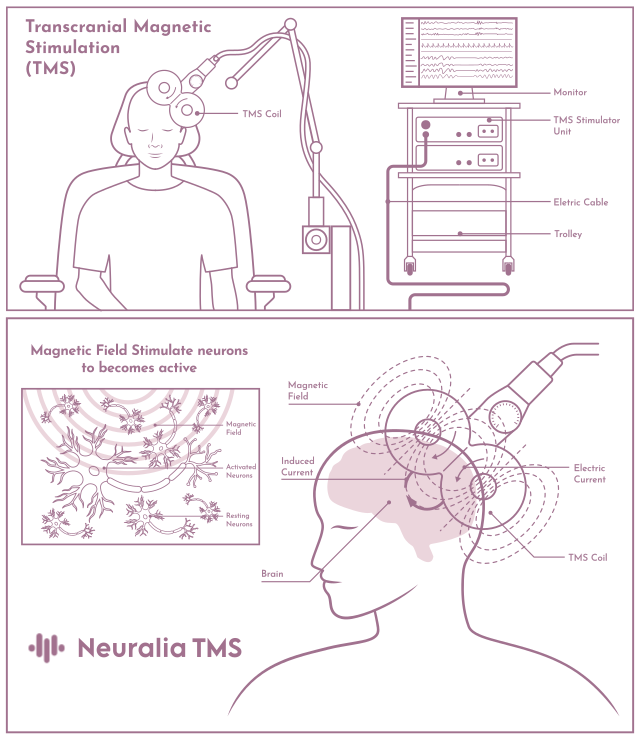
click on the image to enlarge
TMS is done using a special machine which has a magnetic coil attached to a mechanical ‘arm’. This allows for an electromagnetic pulse to be delivered to a precise region in the brain. While receiving TMS, the patient is seated in a comfortable reclined position. The TMS coil is placed above the patient’s head at the correct position.
During the first treatment session, the patient’s individual stimulation dose (ie. the amount of energy required to stimulate the patient’s brain cells) will be determined. This is a unique dose and must be determined for each individual patient. This dose may be rechecked during the treatment course to ensure patients are getting the correct stimulation level.
Once the correct placement and stimulation dose have been determined, the TMS machine will deliver precise impulses to a small section of the brain.
After the treatment session, patients are immediately able to drive and resume normal activities. No medications are given, and patients are completely awake during the whole process.
Dr Shanek Wick – Author Bio
Dr. Shanek Wick, a distinguished Fellow of the Royal Australian and New Zealand College of Psychiatrists, specialises in holistic mental health care with a focus on interventional psychiatry, neurostimulation, and addiction.
Why Neuralia TMS

Lead by Psychiatrists

Next Day Consults Available

Evidence-based, individualised treatment programs

Medicare rebates available
TMS and PTSD Resources

PTSD Treatment in Perth: Your Options Explained
https://www.neuraliatms.com.au/wp-content/uploads/Psychological-Therapy-for-PTSD-Treatment-Perth.png
1500
1000
Neuralia TMS
//www.neuraliatms.com.au/wp-content/uploads/2023/02/neuralia-tms-colour-wide.svg
PTSD Treatment in Perth: Your Options Explained

MDMA-Assisted Therapy for PTSD: What the Evidence Shows
https://www.neuraliatms.com.au/wp-content/uploads/MDMA-Assisted-Therapy-for-PTSD-What-the-Evidence-Shows.png
1500
1000
Neuralia TMS
//www.neuraliatms.com.au/wp-content/uploads/2023/02/neuralia-tms-colour-wide.svg
MDMA-Assisted Therapy for PTSD: What the Evidence Shows

TMS vs. Antidepressants: Which Treatment Is Right for You?
https://www.neuraliatms.com.au/wp-content/uploads/TMS-vs-Antidepressants-Which-Treatment-Is-Right-for-You.png
1500
1000
Neuralia TMS
//www.neuraliatms.com.au/wp-content/uploads/2023/02/neuralia-tms-colour-wide.svg
Reviews
Punya Singh
“TMS for PTSD”
I had a remarkable experience at Neuralia TMS under the care of Dr. Wick and their dedicated team of staff. The staff here truly go above and beyond to make you feel comfortable and at ease throughout your journey.
Vinura G
“TMS for PTSD”
I recently had the opportunity to visit Neuralia TMS, and I must say that my experience was nothing short of exceptional. From the moment I walked through the doors, I could sense a warm and welcoming atmosphere, which immediately put me at ease.
Sonya S
“TMS for PTSD”
I must say Dr Shanek is one of the kindest, most humble psychiatrist I have ever met. I am so grateful to have received TMS treatment and I am impressed by the changes I have had in my mood status. Highly recommend Dr Shanek to anyone looking for an excellent Psychiatrist.
James Mons
“TMS for PTSD”
Dr. Shanek Wick has been absolutely fantastic to work with and came highly recommended to me via my GP. I’ve been referring people to Neuralia TMS ever since. I definitely had some hesitations prior to commencing this journey, but I felt very reassured, and most importantly, I felt heard.