
Keen to start TMS asap?
Please book an appointment with your GP, request a referral for TMS (if suitable) & email to referrals@neuralia.com.au
Free Initial TMS Consult
Please schedule a call with a member of our experienced Neuralia TMS team for a free, no-obligation discussion about TMS.
Our TMS staff are well positioned to answer your questions and describe:
- What TMS is?
- How TMS works?
- What the overall process is like from start to finish?
Please note: We can only accept a limited number of new patients each month on our TMS machines — please schedule your free consult to explore if TMS is good fit for you
Free Initial TMS Consult
Please schedule a call with a member of our experienced Neuralia TMS team for a free, no-obligation discussion about TMS.
Our TMS staff are well positioned to answer your questions and describe:
- What TMS is?
- How TMS works?
- What the overall process is like from start to finish?
Please note: We can only accept a limited number of new patients each month on our TMS machines — please schedule your free consult to explore if TMS is good fit for you
Thankyou
Keen to start TMS asap?
Please book an appointment with your GP, request a referral for TMS (if suitable) & email to referrals@neuralia.com.au

[COUNTER_PRO id=7730]


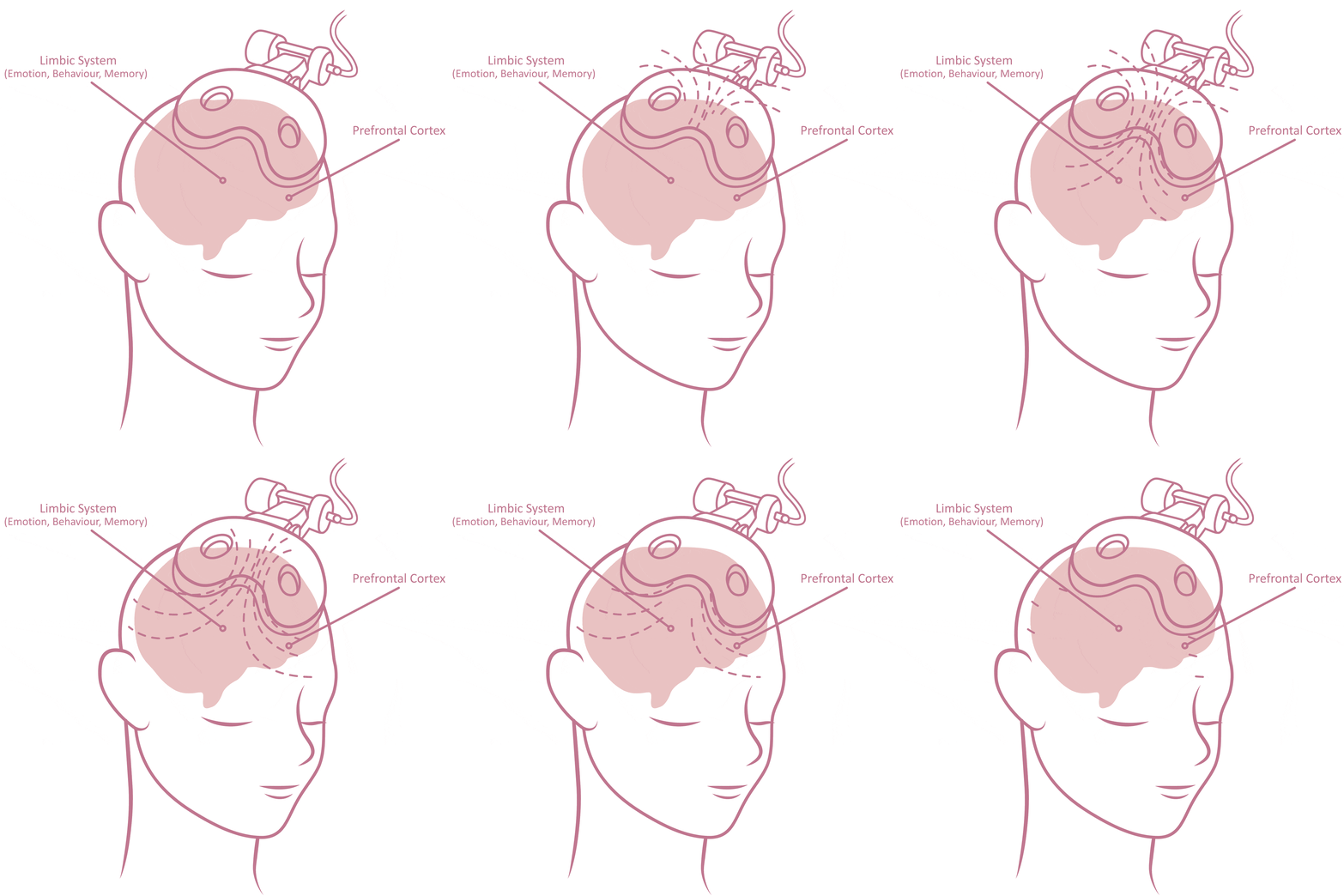
TMS treats Depression, OCD, PTSD & Pain
TMS stands for Transcranial Magnetic Stimulation. It is a breakthrough treatment that uses high strength magnetic fields to promote neuroplasticity.
Neuroplasticity allows for an increase in neural connections in regions of the brain that were previously underactive.
TMS is fast and can fit into your daily routine without the need for recovery time or hospital admissions.

How does TMS work?
TMS stimulates neural activity in brain regions that are underactive. This underactivity is often seen in regions associated with mental illness and chronic pain.
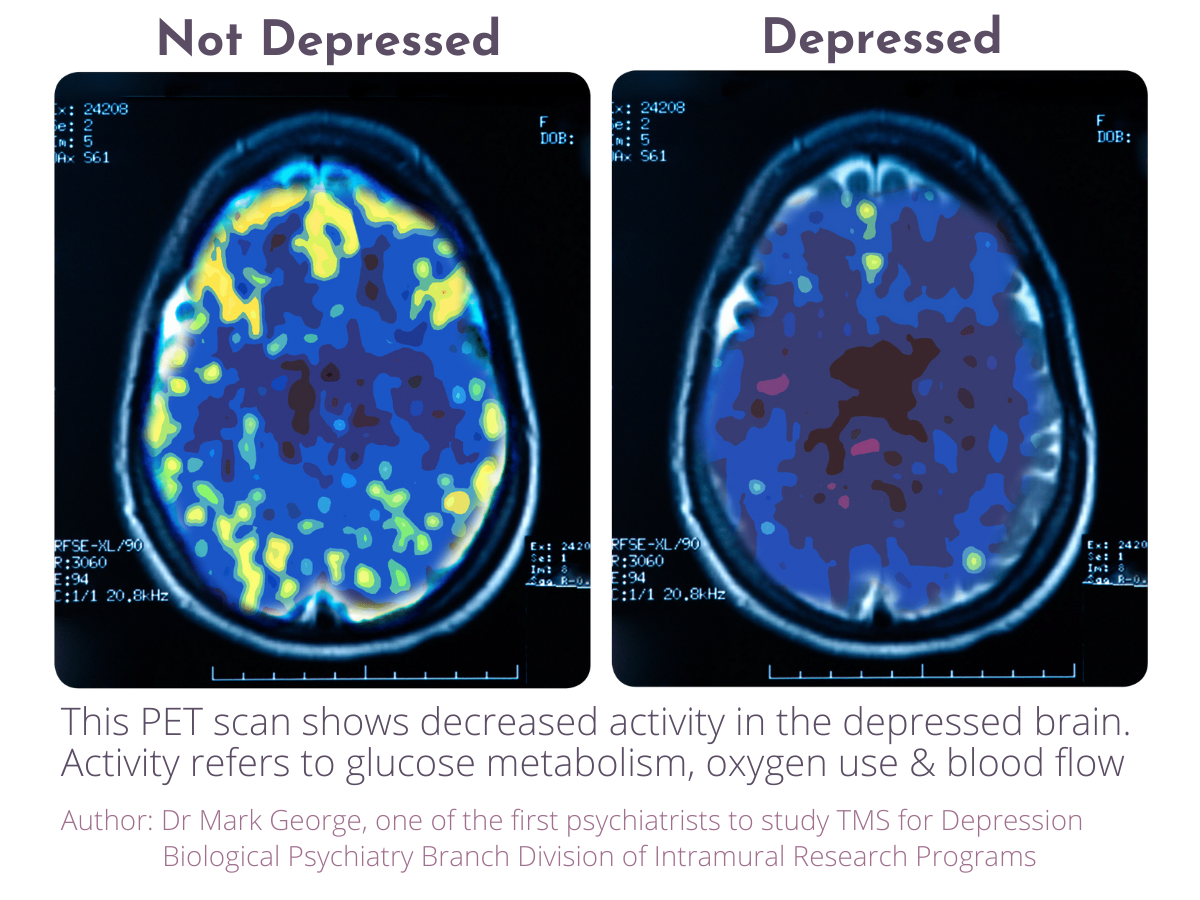
For example, in individuals with depression or anxiety, decreased activity in a region of the brain called the “prefrontal cortex” will typically be seen. This is represented in the image below which shows a PET (Positron Emission Tomography) scan of a person’s brain with depression and without depression. The prefrontal cortex plays an important role in mood regulation.
When these nerves are activated repeatedly, lasting change in brain circuity can occur through the process of neuroplasticity.
How does TMS work?
TMS stimulates neural activity in brain regions that are underactive. This underactivity is often seen in regions associated with mental illness and chronic pain. The most common region we target is called the prefrontal cortex. The prefrontal cortex is strongly involved in the regulation of mood. When these nerves are activated repeatedly, lasting change in brain circuity can occur through the process of neuroplasticity.
Find your nearest Neuralia TMS Clinic

OCD
TMS activates areas responsible for OCD, such as intrusive thoughts & repetitive behaviors.

PTSD
TMS targets the prefrontal cortex, the region controlling fear & anxiety responses.

Chronic Pain
TMS can increases the body’s own pain-killer chemicals to improve chronic pain symptoms.
What does TMS look like?
During the first “Mapping” appointment our TMS psychiatrists and nurses will do the following:
1. Identify the coordinates of the target location for treatment. In the case of depression, the target location is the near the forehead at a place called the Prefrontal Cortex. This is the area where we would aim to promote neuroplasticity (strengthening the connections between the nerves).
2. Personalise the protocol based on your RMT (Resting Motor Threshold). This is the minimium magnetic field intensity required to cause a motor nerve in your brain to activate.
Following the mapping session, you can then begin your TMS Treatment sessions. During these 20 minute sessions, you may sit back and relax, chat to our TMS nurses or watch some Netflix.
- Please see our TMS patient journey for a more in-depth explanation of the process.
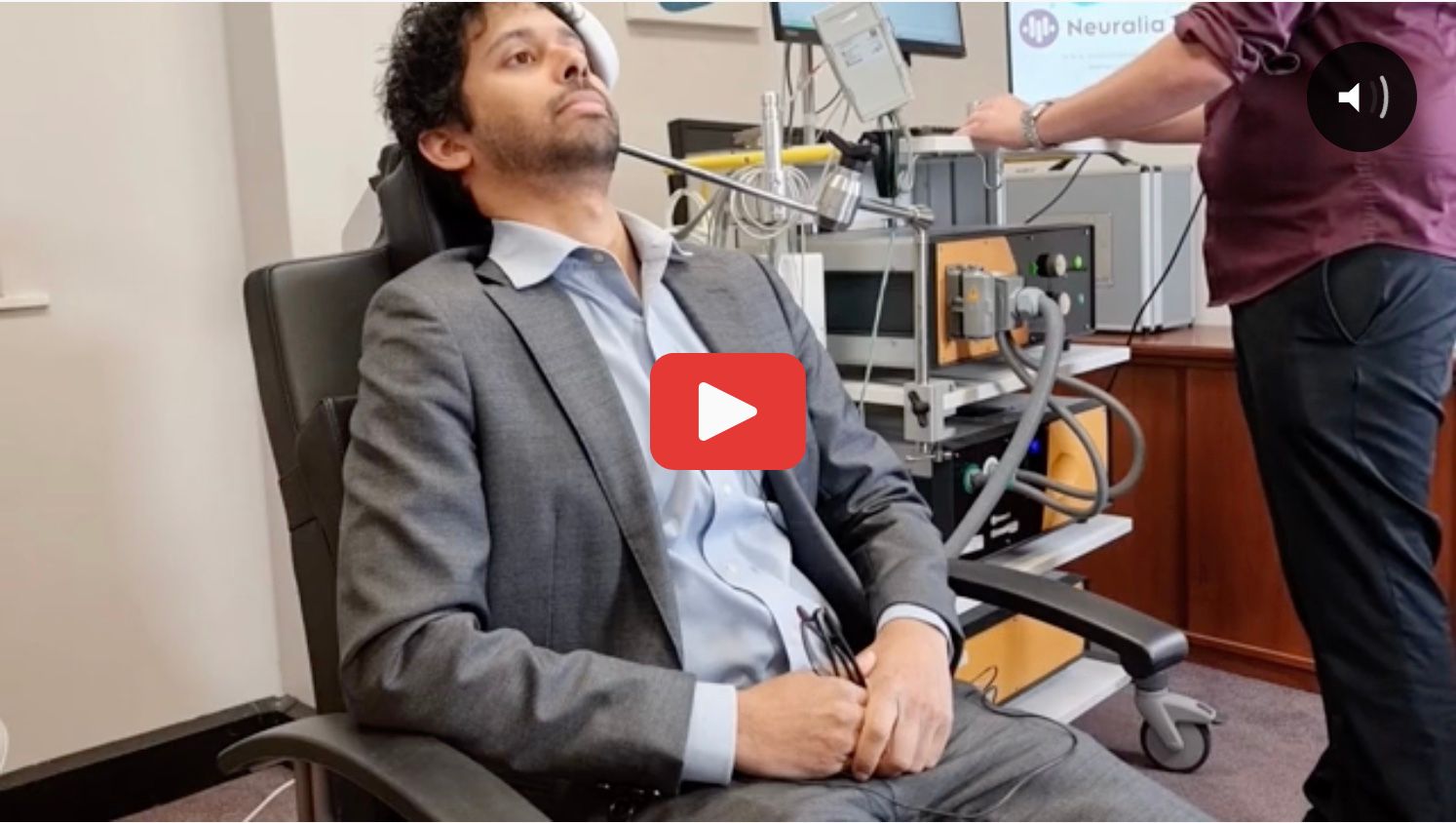
- To see Dr Wick explaining and receiving TMS, please click the following picture.
What TMS looks like?
1. Identify the coordinates of the target location for treatment.
During the first “Mapping” appointment our TMS psychiatrist will identify the coordinates of the treatment location. In the case of depression, the treatment location will be the near the forehead at a place called the Prefrontal Cortex. It is here where we would look to promote neuroplastic changes (strengthening the connections between the nerves).
2. Personalise the protocol based on your RMT (Resting Motor Threshold).
This is the minimium magnetic field intensity required to cause a nerve in your brain to activate. Following the mapping session, you can then begin your TMS Treatment sessions. During these 20 minute sessions, you may sit back and relax, chat to our TMS nurses or watch some Netflix.
OCD
TMS activates areas responsible for OCD, such as intrusive thoughts & repetitive behaviors.
PTSD
TMS targets the prefrontal cortex, the region controlling fear & anxiety responses.
Chronic Pain
TMS increases the body’s own pain-killer chemicals to improve chronic pain symptoms.
Hear From Our Patients.
Madi
I can say without hesitation that Dr. Wick is the kindest, most thorough Doctor I’ve ever seen. Dr. Wick takes the time and effort to really see his patients and assist you in the friendliest, non judgemental manner. It’s rare to find a doctor you can trust but I’m here to tell you Shanek Wick is that doctor. The TMS staff are some of the kindest, warmest and most competent folks I’ve experienced too. You know you’re in a safe place here. No one will tell you that you just need to go for a walk…
Skyler
Dr Shanek Wicks is extremely caring and compassionate. His knowledge about this revolutionary new medical treatment option is a first for West Australians in treating depression. I can highly recommend him.
Cass
Dr Wick will change your view of psychiatry, I was very nervous about my first appointment due to previous experiences elsewhere and was put at ease straight away. Dr Wick and the staff are warm, friendly and professional. Dr Wick is clearly very passionate about his work. if you are looking for a clinic where you feel heard and understood, this is the one you want to attend.